When it comes to dental procedures, patients now have more choices than ever before. Both laser dentistry and traditional dental procedures have their own advantages, and knowing the differences between the two can help you make a better-informed decision for your dental needs. With advances in dental technology, the question arises: Is laser dentistry a better option than traditional dentistry? In this blog, we will explore the differences between laser dentistry and traditional dentistry, covering everything from accuracy and recovery time to comfort and safety.
Recent developments in dental technology have made laser dental care an innovative, minimally invasive option. Whether you want to enhance the beauty of your smile with gum reshaping or need treatment for more complex dental issues, such as root canal therapy, the choice between laser dentistry and traditional dentistry is important. This blog will walk you through everything you need to know about both options.
What is Traditional Dentistry?
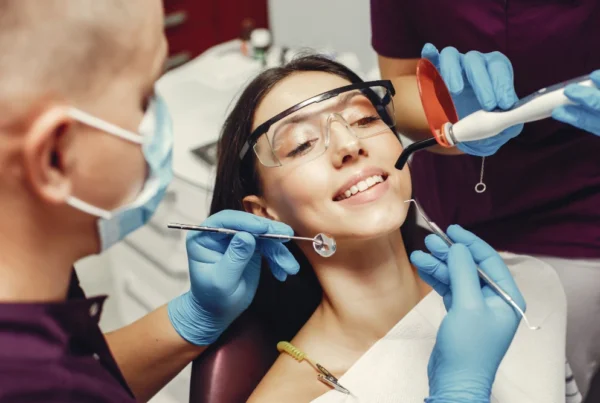
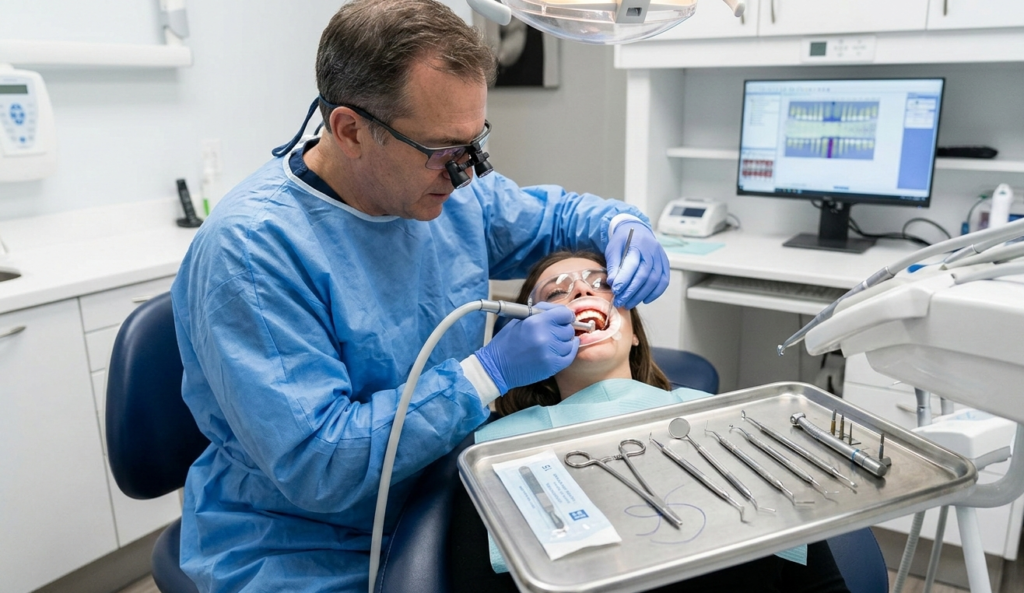
Traditional dentistry usually involves the use of instruments such as the dental drill, scalpel, and sutures (stitches). These instruments have been used for many years in procedures such as cavity removal, root canal treatment, and tooth preparation. Although very effective, traditional dentistry may sometimes cause discomfort and a longer healing process due to the invasive nature of the procedures. For instance, the high-speed drill used to remove decayed tooth material may cause vibrations that can be uncomfortable for the patient. Additionally, scalpels used in soft-tissue surgery may cause more swelling and bleeding, leading to a longer healing process.
In traditional dentistry, anesthesia is usually needed to ensure that the patient is comfortable, especially during invasive procedures. Nevertheless, the use of drills and scalpels may still make some patients feel uncomfortable due to the noise, vibration, and sensation associated with these instruments.
The Rise of Laser Dentistry
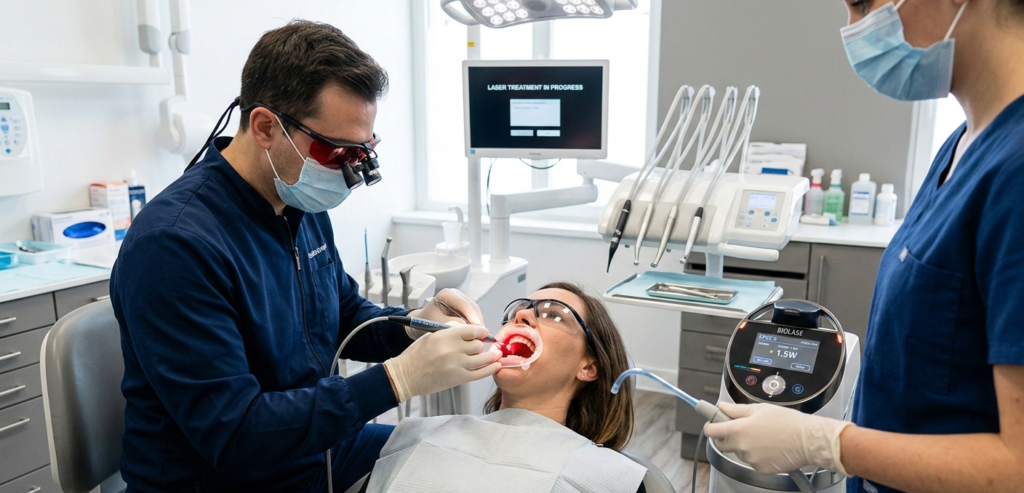
On the other hand, laser dentistry in San Clemente uses modern technology that harnesses light energy to perform a range of dental procedures. Lasers can be categorized as hard-tissue lasers for dental procedures and soft-tissue lasers for gum treatments. CO2 and diode lasers are common types used in gum reshaping, frenectomy, and periodontal therapy. These lasers have several advantages over traditional dental procedures.
The first advantage of laser dental procedures over traditional ones is their minimally invasive nature. Just like various teeth-whitening options, laser dentistry is intended to minimize the need for incisions, resulting in less bleeding and a shorter recovery time. Moreover, laser dentistry is highly precise, targeting only the required tissue while leaving healthy tissue intact. This precision eliminates the need for anesthesia, which is required in traditional dental procedures, especially in more complex procedures.
Laser therapies also promote faster healing by minimizing thermal damage to surrounding tissues. This, in turn, may increase the healing response and reduce bacterial levels, making it a preferable choice for patients seeking a more comfortable and effective treatment.
Laser vs Traditional Dentistry: A Quick Comparison
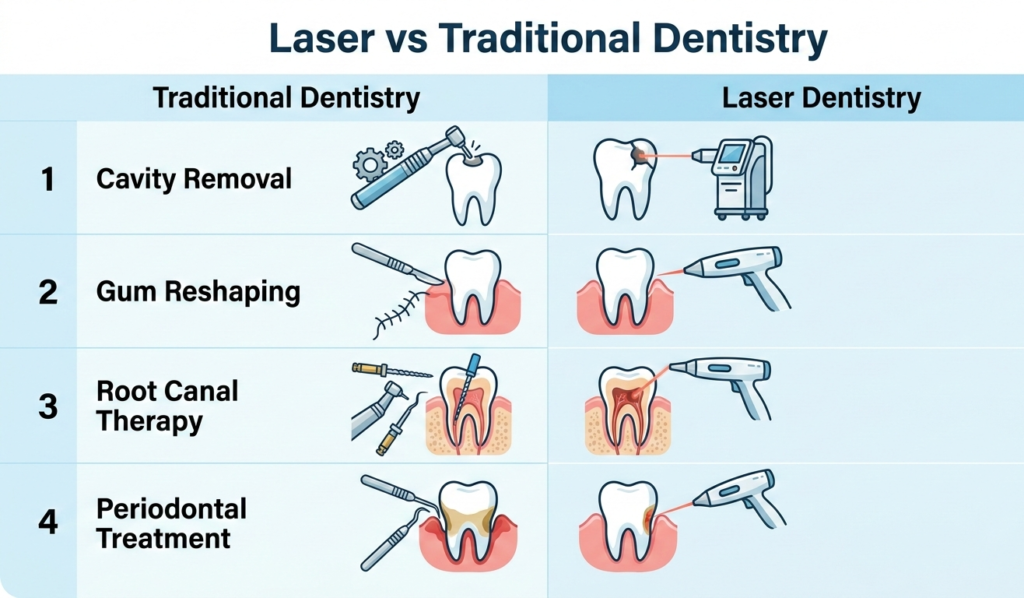
Now, let’s discuss some of the differences between laser dentistry and traditional dentistry in terms of some of the most common dental procedures:
- Cavity Removal: Traditional cavity removal with a drill can be quite painful due to the vibration and heat involved. However, laser dentistry provides a painless alternative to drills in many cases, without the need for anesthesia.
- Gum Reshaping: Traditional gum reshaping involves cutting the gum tissue with a scalpel and then stitching it back together. However, laser dentistry allows gum tissue to be reshaped with precision, without bleeding or the need for stitches.
- Root Canal Therapy: Traditional root canal therapy uses mechanical tools and drills to clean the tooth. However, laser dentistry allows the use of dental laser technology to remove infected tissue with precision and speed, making it a less invasive procedure.
- Periodontal Treatment: Conventional periodontal treatments, such as scaling and root planing, may be painful. Lasers can more effectively target periodontal pockets while causing less discomfort to surrounding tissues.
The Benefits of Laser Dentistry
With the increasing use of laser dentistry among dental practices, patients in San Clemente can now enjoy the benefits of advanced dental treatments. Laser dentistry in San Clemente has become popular for its ability to provide patients with greater comfort and precision. Whether you are undergoing a dental implant procedure, gum reshaping, or root canal treatment, laser dentistry offers a faster, pain-free recovery.
Laser vs Traditional Dentistry: Which is Better for You?
When comparing laser vs traditional dentistry, the best option often depends on the type of procedure and your personal preferences. For many patients, the main attraction of laser dentistry is the advanced technology involved and the fact that procedures can often be performed without resorting to invasive methods. The fact that it is possible to undergo a procedure without the need for much anesthesia and with less post-operative pain is a big attraction for many people.
However, traditional dentistry may still be the best option in some cases. If you are confused about choosing an emergency dentist or need to undergo procedures that involve extensive structural work, such as installing dental implants.
Embrace Modern Precision
Are you looking for a modern, minimally invasive dental solution? Laser dentistry could be the best choice for you. It provides greater precision, faster recovery, and greater comfort. At Smile Design Dental Group, we are committed to using the latest technology to make your dental treatment as effective, efficient, and comfortable as possible.
Ready to learn more about laser dentistry or traditional dental care for your next dental visit? Call us today to schedule your appointment and start your journey to a healthier, happier smile.
Questions People Ask About Laser Dentistry
- What is the main difference between laser and traditional dentistry?
Laser dentistry uses focused light energy for precise, minimally invasive procedures with faster healing, while traditional dentistry relies on mechanical tools like drills and scalpels, which can cause more discomfort and longer recovery times. - Can laser dentistry reduce the need for anesthesia?
Yes, laser dentistry often reduces the need for anesthesia because it is minimally invasive. Lasers target the affected area with precision, reducing discomfort and minimizing trauma to surrounding tissues, making the procedure more comfortable overall. - What are the benefits of laser dentistry for gum reshaping?
Laser dentistry offers precise, bloodless gum reshaping with minimal pain, swelling, and faster recovery. It eliminates the need for scalpels and stitches, leading to less discomfort and a more efficient healing process than traditional gum surgery. - Is laser dentistry better for periodontal treatment?
Yes, laser dentistry is highly effective for periodontal treatment, as it targets infected tissue with precision, reducing bleeding and pain. The procedure promotes faster healing, minimizes trauma to healthy tissues, and reduces the risk of post-op complications. - Can I use laser dentistry for tooth preparation before a crown placement?
Absolutely! Laser dentistry can be used to prepare teeth before crown placement, offering a precise and comfortable treatment. It eliminates vibrations from traditional drills, resulting in a smoother procedure, less discomfort, and faster recovery. - How long is the recovery after a laser dental procedure?
Recovery after laser dental procedures is typically faster than traditional methods. With minimal trauma to surrounding tissues, patients feel less swelling, pain, and bleeding, allowing for a quicker return to normal activities and a more comfortable recovery.